The Game Has Arrived. The Kit Hasn't.
Category: Culture | Read time: 9 min read
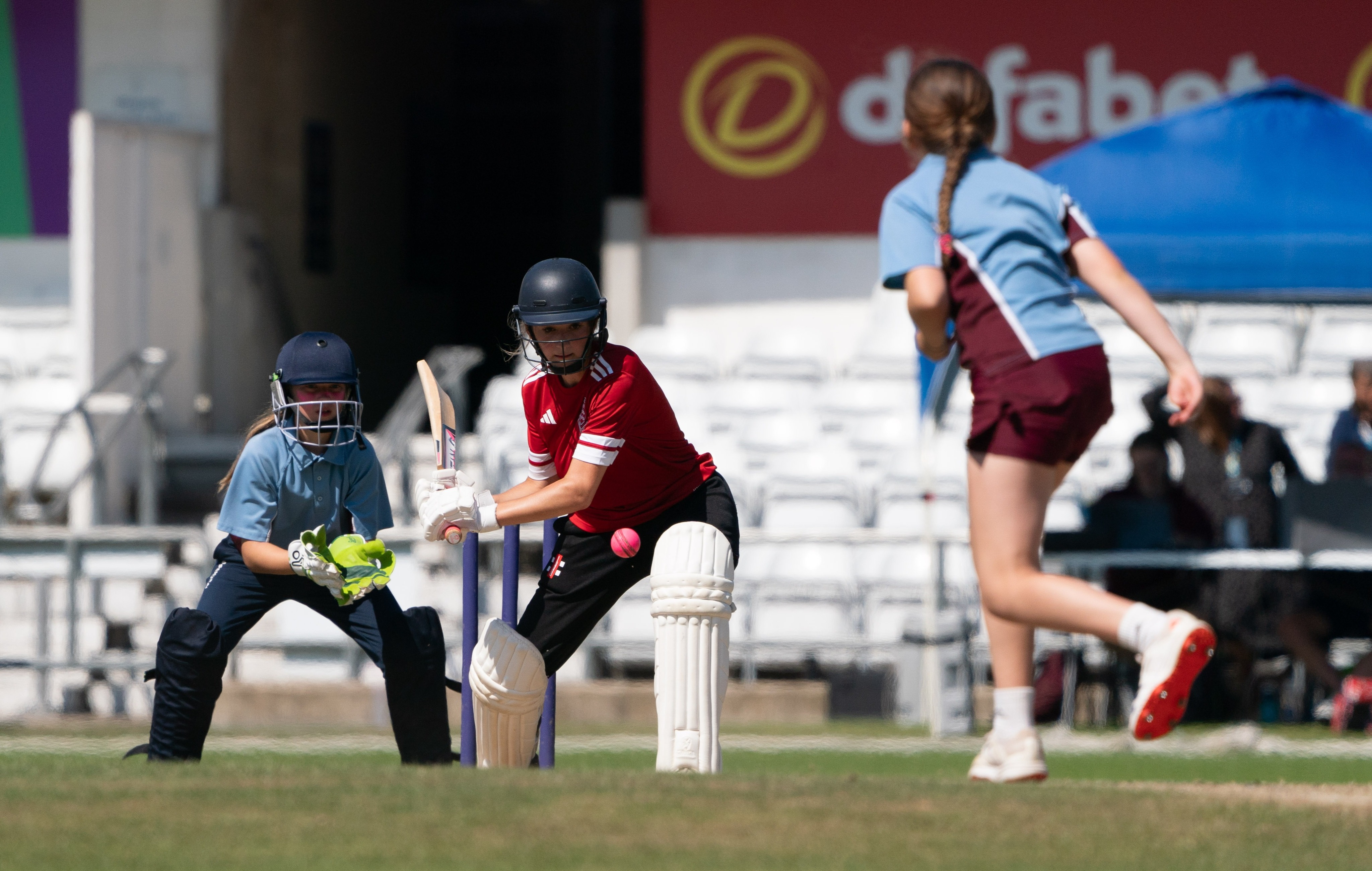
The women's game has the crowd, the sponsors and the headlines. It still doesn't have a jersey, or a guard, actually built for the body wearing it.
Nobody Has Actually Sized This Market
185 million people watched the 2025 ICC Women's Cricket World Cup final on JioHotstar alone, a number that matched the men's T20 World Cup final the year before. Global cricket apparel and equipment is a $1.86 billion market, forecast to grow to $2.39 billion by 2030. And if you search for a market report that breaks out how much of that is spent on kit actually designed for women, you will not find one. The analysts have not bothered to size the segment. Neither, it turns out, has most of the industry.
That is not a research gap. It is a tell. Nobody builds a market report for a category nobody thinks is worth the spreadsheet row.
The market has stopped waiting for permission to exist. The suppliers are the ones still catching up.
What Good Actually Looks Like
It is not that nobody has solved this. It is that the people solving it are mostly starting from a spare bedroom, not a boardroom.
Lacuna Sports was founded by Leigh Burns after watching her daughter Caroline play in kit that was never built for her. The brand now offers two distinct fits across its range, Spin (relaxed) and Pace (slim), with trousers cut to sit properly through the hips and to actually accommodate a thigh pad instead of bunching around one. It sells period pants alongside its playing kit, which sounds like a small detail until you realise almost nobody else in cricket does. Lacuna is now the official kit supplier for the Charlotte Edwards Foundation's development tour and was featured on BBC One.
Then there is Maiden Cricket, founded in 2024 by sisters Honor Black, then 17, and Cat Black, 16, from Chichester. Their reason for starting it is the whole argument in one sentence: "Every time we wore those oversized jerseys and trousers, it felt like we were borrowing someone else's dream." They built trousers with built-in shorts and breathable panels, tops cut for the actual movement of bowling and batting, and fit built from female body measurements rather than a scaled-down male template. Their own research, a survey of 2,000 women, found over a third had been discouraged from playing cricket at all because of the sportswear they were given. In August 2026 they took the business onto Dragons' Den, where all five Dragons offered a combined £50,000 for 25 percent equity. The sisters turned it down. Cat Black called the stake "extortionate" given how far the company had grown since filming, and the pair went on to close an oversubscribed £400,000 seed round instead, backed by investors in the US and South Africa. From grassroots clubs to county boards, Maiden already supplies hundreds of teams, schools and universities across the UK, and now it has crossed the Atlantic through a partnership with the Seattle Orcas Women's T20 Exhibition. With cricket back on the Olympic programme for LA2028, it's a timely chance to help inspire America's next generation of players.
NEXX Cricket has done the same for hard goods. Its bats, pads, gloves and kit bags were developed in consultation with international players to remove what the brand calls the "long straps, bulky pads or baggy gloves" that come with wearing equipment built for a different body. England World Cup winner Alex Hartley's review of the range says it plainly: "The first set of cricket equipment I've had that actually fits."
All three prove the product problem was always solvable. What they also prove, by being the exception rather than the rule, is that nobody with real manufacturing scale has bothered to try.
The Guard Nobody Redesigned
Search "female abdominal guard" and you will find product pages from Kookaburra, DSC, SG and Chase. Progress, on paper. Read what the pages actually say and the story changes: DSC lists its version as "traditionally shaped," Chase describes a "classic shape with a padded shell," and Kookaburra's copy stops at "ergonomic moulded shell" with nothing beneath it explaining what makes the mould female-specific. None of the four pages document an anatomical redesign. Chase's guard runs to £7. That is the price of a men's mould, resized and relabelled, not the price of a product that has been through real design work.
Meanwhile the thing that actually decides whether a player wants to be on the field that week barely gets discussed in a kit meeting at all. Nearly half of England's squad were menstruating during a 2021 Test against India, and at least one Indian batter left the field for the same reason. England opener Tammy Beaumont put it plainly: "For a lot of us, being on while wearing whites for a Test was quite a daunting prospect. There was an awful lot of anxiety around it." A 2022 Puma and Modibodi survey found one in two girls quit sport altogether because of their period. Cricket Australia and the West Australian Cricket Association responded with a pilot swapping white trousers for black ones at grassroots level, backed by Commonwealth Bank. Football got there first: England's women switched from white shorts to blue in 2022, and Wimbledon relaxed its all-white rule the same year.
None of this requires a research grant. It requires someone in procurement to treat menstrual health as a design brief rather than an HR footnote.
An abdomen guard shaped like a smaller men's guard is not women's kit. It is a rounding error dressed up as inclusion.
Why Nobody's Written the Cheque
This is not a technical problem. It is a procurement one. Look at who actually manufactures WPL playing kit and the pattern holds up. Skechers makes Mumbai Indians' kit. Puma makes both Delhi Capitals' and Royal Challengers Bengaluru's. All three deals were struck explicitly to cover "both men's and women's teams" in one contract, which sounds efficient until you notice what it means: not one of those partnerships was built as a women's product in its own right, it rode in on the men's IPL deal. WPL sponsorship has roughly tripled in three years, from about Rs 40 crore in 2023 to close to Rs 130 crore this season, with premium partnership rates up 15 to 20 percent. That is real, brand-verified appetite. Yet the only apparel deal actually negotiated for WPL on its own terms this year, not inherited from a men's contract, is Dr Fixit signing on as the official umpire jersey partner. Not a playing kit deal. An umpire's shirt.
That is what an afterthought category looks like from the outside: three franchises playing in kit designed for somebody else's deal, and the one apparel partnership actually built for WPL going to the officials, not the players. UP Warriorz are the partial exception, their Banarasi-heritage jersey came from a dedicated design partner, Ekaya Banaras, rather than a shared contract. Even that stops at a single match jersey. Nobody has taken the same commissioning instinct and built a full range out of it.
Cricket has tried this before, briefly. In 2018, the Women's International Cricket League brought in designer Masaba Gupta to create playing and training kit for its six teams, calling the brief "functional, feminine and different." It was a good instinct. It also went nowhere: no comparable design partnership followed it, and the league did not survive long enough to build on the idea. The gap was never a lack of imagination. It is a lack of follow-through.
Who Should Move First
The brands best placed to fix this are the ones already on the shelf, not the ones with the furthest to travel. Kookaburra, SG and DSC already sell a "female" abdomen guard, which means they already sit inside cricket's manufacturing and retail system in a way a new entrant would take years to build. What none of them have done yet, as the product pages themselves show, is put real design investment behind that foothold: proper anatomical research, then a full range built around it, base layers, trousers and protection engineered together as one system instead of sold as separate afterthoughts. That is a smaller organisational leap for them than for a brand starting from zero. It still requires them to actually take it.
WPL franchises are the second obvious mover. A franchise that backs a specialist like Lacuna or Maiden as its official womenswear partner, with its own marquee players involved in fit trials and design, gets an authentic story it currently cannot buy from a bundled master kit deal. That window is already narrowing: Maiden just turned down a televised offer because outside investors were valuing the business higher, which means the next specialist brand worth backing will not stay cheap or unclaimed for long. Challenger activewear brands are the third route in: brands with no legacy cricket contracts to protect and a track record of building for women first, not adapting for them second.
The Money Is Already Moving
The proof that this pays no longer sits only in adjacent categories. Global women's elite sport revenue reached an estimated $2.35 billion in 2025, and more than half of it, $1.26 billion, came from commercial income: sponsorship, partnerships and merchandising, not broadcast. Gymshark, built almost entirely on product-led growth for an audience mainstream sportswear brands underserved for years, posted record revenue of £646 million in 2025, up 6.4 percent on the year before. And now cricket has its own data point. Maiden Cricket turned down a nationally televised offer of £50,000 for 25 percent of the business, then closed an oversubscribed £400,000 seed round on better terms, backed by investors in the US and South Africa, and picked up a sponsorship of the Seattle Orcas along the way. The capital is already flowing toward brands that took women's cricket apparel seriously as a product category. Cricket's major manufacturers have simply not placed a serious bet yet, while two sisters running the business around school already have proof that one pays off.
Cricket keeps citing the WPL's viewership as proof the women's game has arrived. It has not yet asked why the retail numbers don't say the same thing.
The 19 Yards Take
- Manufacturers: you already have a £7 "female" abdomen guard on the shelf and the retail relationships to sell a proper range. Spend on the design work you haven't done yet, and you own a category nobody else has claimed.
- Franchises: Rs 130 crore is chasing WPL sponsorship this season, and Maiden's £400,000 raise just showed outside investors are already pricing this opportunity. Sign a specialist kit partner before a rival does.
- Boards: nearly half a Test squad was managing its period during a Test match in whites. Treat that as a design brief, the way football treated its own shorts problem in 2022, not as a subject to avoid.
Cricket has never had a shortage of ambition in the women's game, the numbers in this piece prove that. What it's short of is someone willing to execute on the parts that don't make a highlight reel.
Talk to 19 Yards if you're ready to build the version of women's cricket that actually earns its place on the field, not just in the highlight reel.