South Africa’s WT20 Triumph Over India: Why Upsets Are Good Business for Cricket
Category: Commercial Strategy | Read time: 10 min read
South Africa’s World T20 win over India is a case study in how disruption at the top of the cricket pyramid drives financial opportunity, long-term rights value, and sponsor confidence—if exploited properly.
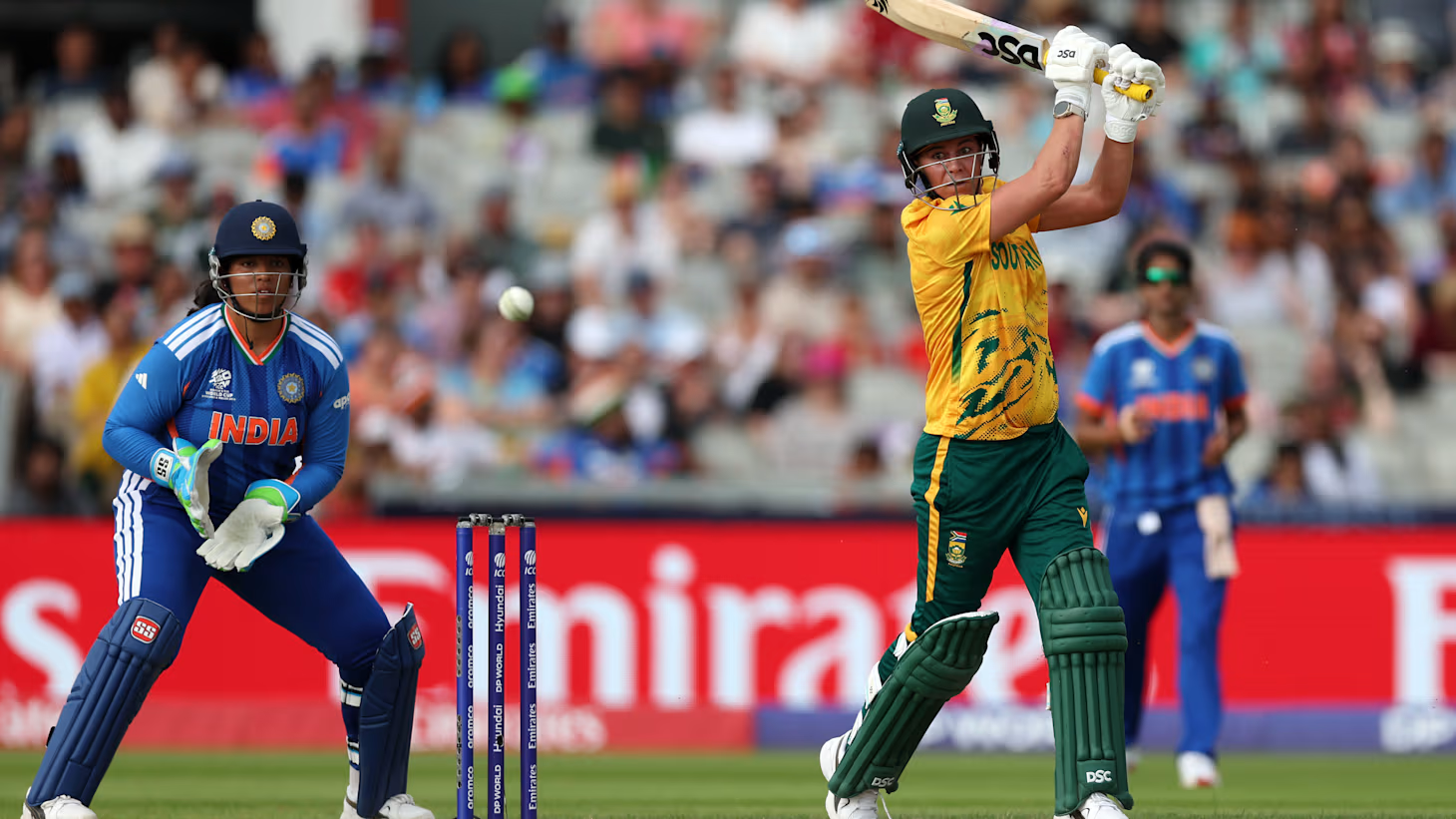
South Africa Just Beat India at the Women's T20 World Cup. Cricket's Boardrooms Should Be Quietly Pleased.
Marizanne Kapp scored an unbeaten 81 off 45 balls at Old Trafford on 21 June, guiding South Africa to a six-wicket win over India in their Women's T20 World Cup group match. India had posted 158 for 7. South Africa recovered from 25 for 2 to chase the target down with eight balls to spare, with Tazmin Brits contributing 40 in her first match of the tournament. Both teams now sit on four points in what has been described as the group of death, with India needing to beat Australia in their final group match to reach the semi-finals.
The cricket was genuinely excellent. The commercial implications are more interesting than most coverage will acknowledge, and they go directly against the instinct that dominates most cricket boardroom thinking.
The India-First Assumption That Needs Challenging
The central assumption in most cricket commercial planning is that the game only generates serious revenue when India wins, or at minimum advances deep into a tournament. There is real truth underneath that assumption. India's broadcast audience, sponsorship market, and overall financial weight in world cricket are without precedent in the sport. JioStar's commercial position across the ICC's current rights cycle, and the value of fixtures involving India specifically, reflect that reality clearly.
But the assumption distorts decision-making in a specific way. Boards and rights holders chase the certainty of guaranteed Indian audience interest, often at the expense of investing in the kind of competitive unpredictability that makes a sport genuinely valuable to broadcasters and sponsors over the long term. The implicit boardroom logic, that the safest commercial bet is to maximise India's path through any tournament, treats one team's dominance as the whole game's commercial strategy. That is short-term thinking dressed up as risk management.
Why an Upset Like This Is Commercially Healthy
When South Africa beats India in a genuinely contested group of death at a Women's World Cup, several things happen simultaneously that a routine India victory would not produce. Indian audiences pay close attention regardless of the result, because genuine jeopardy drives engagement in a way a predictable outcome cannot. South African sponsors and broadcasters see a credible commercial story building around their own team rather than treating South African cricket as a feeder market for Indian-facing content. And the remainder of the tournament becomes a genuine multi-team contest rather than a coronation, which is precisely the kind of narrative tension that broadcasters build campaigns around and that justifies premium advertising rates across the full tournament rather than just the marquee fixtures.
This is the same commercial principle that makes the IPL valuable beyond any single Indian superstar. The competition's worth comes from genuine, sustained unpredictability across multiple franchises and storylines, not from guaranteeing any one outcome. A cricket commercial ecosystem that depends entirely on one team's dominance to generate value is fragile by design. One that can generate genuine commercial interest around multiple credible contenders is structurally healthier, even if it requires boards to think beyond the safest, most predictable inventory.
What This Means for Cricket South Africa Specifically
Cricket South Africa's broadcast position has been built deliberately rather than accidentally. CSA's seven-year partnership with Viacom18, covering senior men's and women's international cricket played in South Africa from 2024 to 2031, gave the board a long-term Indian broadcast relationship that extends specifically to the women's game, not just the men's. That structural decision, securing women's cricket rights alongside men's in the same long-term deal rather than treating them as a separate and lesser commercial conversation, is now paying a dividend that the original deal architects may not have fully anticipated. A South African women's team capable of beating India on the biggest stage available to them gives that seven-year broadcast relationship a genuine commercial story to build around, rather than a contractual obligation to fulfil.
For sponsors and broadcasters with existing or potential relationships with South African cricket, performances like Kapp's are exactly the kind of moment that should change the commercial conversation. A result like this is evidence, not just promise, that the South African women's team can generate competitive drama against the sport's most commercially significant nation on the format's biggest stage.
The Pattern This Connects To
This result lands in the middle of a tournament we have already argued needs to function as a genuine performance review for women's cricket's commercial maturity. The sponsors backing this tournament, Google, Unilever, Kettle Chips among them, are making calculated commercial bets on the format's ability to deliver genuine drama and audience engagement across the full tournament, not just in marquee fixtures involving the host nation or India.
A group of death where India and South Africa both sit on four points heading into their final group matches, with India needing to beat Australia to advance, is precisely the kind of unresolved tension that makes a tournament worth sponsoring beyond its single highest-profile fixture. If India had cruised through the group stage without a serious challenge, the broadcast and sponsorship value of the tournament's middle weeks would have been considerably lower than what South Africa's win has now created.
What Boards Should Actually Take From This
The instinct to treat any result other than Indian dominance as a commercial risk is backward. Cricket's boards, broadcasters, and sponsors should be examining results like South Africa's win at Old Trafford for what they actually demonstrate: that investment in competitive depth beyond the sport's single biggest market produces genuine commercial value, not just sporting unpredictability.
CSA's long-term broadcast partnership with Viacom18 covering women's cricket specifically is a structural decision other boards should study. Building the commercial relationship before the moment of competitive payoff, rather than scrambling to capitalise after an unexpected result, is what allows a board to actually benefit when a result like Sunday's happens. The boards that have not made equivalent structural commitments to their own women's programmes will find themselves unable to capitalise in the same way if their own team produces a similar moment.
South Africa beating India at a Women's T20 World Cup is not a threat to cricket's commercial model. It is evidence that the model works best when it is not entirely dependent on a single outcome. The boards that have built genuine commercial infrastructure around their own teams, the way Cricket South Africa has done with its long-term Viacom18 partnership, are the ones positioned to benefit when moments like Kapp's innings happen.
If you want to think through how to build commercial resilience into your cricket board's rights and sponsorship strategy, let's start a conversation at 19 Yards.